
Did you know millions of vehicles are thrown away each year? This adds to big environmental problems. The way we get rid of junk cars can harm our environment a lot.
We know how important it is to dispose of junk cars the right way. If we don’t, these cars can spill harmful stuff. This can pollute our soil and water. It’s not just the law; it’s also key to keeping our planet safe.
We want to help you learn how to get rid of junk cars the green way. Knowing how junk car disposal affects our planet helps us all. Together, we can make our environment cleaner and safer.
Key Takeaways
- Proper junk car disposal is key for protecting our environment.
- Junk cars can pollute soil and water if not disposed of right.
- There are eco-friendly ways to get rid of junk cars.
- Understanding the impact helps us make better choices.
- Responsible disposal is both a law and a moral duty.
Understanding the Impact of Junk Cars on the Environment
Getting rid of junk cars is a big deal for our planet. When cars stop working, they can pollute if not disposed of right.
How Junk Cars Contribute to Pollution
Junk cars pollute in many ways. If not disposed of right, they leak harmful fluids like oil and gasoline. These leaks can contaminate soil and water.
Key pollutants from junk cars include:
- Heavy metals from batteries and other parts
- Toxic fluids like brake and transmission fluid
- Pollutants from decomposing vehicle parts
Hazardous Materials Found in Junk Cars
Junk cars have harmful materials that can hurt the environment and people. These include heavy metals and toxic fluids that need careful disposal.
Some hazardous materials in junk cars are:
- Lead-acid batteries
- Used engine oil
- Freon from air conditioning systems
Recycling these materials is key to reducing harm to our planet.
The Benefits of Recycling Junk Cars
Recycling junk cars has many benefits. It helps reduce landfill waste and recovers valuable materials. This makes the automotive industry more eco-friendly.
One big plus of junk car recycling is less waste in landfills. Junk cars in landfills can leak harmful substances like oil and coolant. Recycling these vehicles stops this pollution.
Reducing Landfill Waste
Recycling junk cars also means less waste in landfills. This process includes:
- Draining fluids that can contaminate soil and water
- Crushing and recycling metal parts
- Properly disposing of hazardous components
This way, we cut down on landfill waste. We also save natural resources by reusing materials from old cars.
Recovering Valuable Materials
Recycling junk cars also lets us get valuable materials like steel and aluminum. These can be melted down and used in making new cars and products. This cuts down on the need for raw materials.
The recovery process involves dismantling, shredding, and melting down the metals. This saves energy and reduces the harm from mining and processing raw materials.
By recycling junk cars, we can get up to 75% of the vehicle’s materials back. This greatly reduces the need for natural resources and lowers emissions from production.
State Regulations on Junk Cars

It’s key to know the rules on junk cars in each state. These rules help keep our environment safe. They vary because different places have different worries and ways to handle waste.
Understanding Local Laws
Local laws aim to lessen junk cars’ harm to the environment. They might ask for:
- Safe ways to get rid of junk cars to stop harmful stuff from getting into nature.
- Proof that junk cars were disposed of correctly to make sure rules are followed.
- Licenses for companies that remove junk cars to make sure they follow the rules.
Knowing these laws helps us avoid fines and penalties. It also helps us pick the best junk car removal service that follows the rules.
Importance of Compliance for the Environment
Following state rules on junk cars is vital for our planet. Junk cars have harmful stuff like lead, mercury, and cadmium. If not thrown away right, they can pollute our soil and water.
By following the rules, we make sure these harmful materials are dealt with safely. This helps protect our environment.
Also, following the rules helps recycle valuable parts from junk cars. This means we use less new materials and reduce harm to our planet.
In short, knowing and following state rules on junk cars is important. It helps us avoid legal trouble and keeps our environment safe. We should all choose eco-friendly ways to get rid of junk cars.
Eco-Friendly Junk Car Removal Options
Eco-friendly junk car removal is key for our planet. As we become more eco-aware, how we get rid of junk cars changes. We aim to offer easy, quick cash for car sellers with clear, efficient service.
Choosing the Right Towing Service
Choosing a towing service for your junk car is important. Find services that follow eco-friendly practices, like recycling parts and disposing of hazardous materials safely.
- Check if the towing service has a recycling program for vehicle parts.
- Ensure they follow safe disposal practices for hazardous materials.
- Look for companies with a transparent process and clear environmental policies.
How to Find Reputable Junk Car Buyers
Finding a trustworthy junk car buyer is key for a smooth experience. Research and read reviews to confirm their reputation. Look for buyers who are open about recycling and have a clear car purchase process.
- Check online reviews and ratings for the junk car buyer.
- Ask about their recycling practices and environmental policies.
- Ensure they offer fair prices and have a straightforward purchasing process.
By picking the right towing service and junk car buyer, you help the environment. We’re committed to making junk car removal easy and green.
The Role of Auto Salvage Yards
Eco-conscious automotive recycling relies on auto salvage yards. They manage junk cars responsibly. This ensures valuable materials are recovered and hazardous substances are handled safely.
Auto salvage yards are key in the recycling chain. They process junk cars and salvage parts for resale. This cuts down on the need for new materials and reduces environmental impact.
What Happens to Junk Cars at Salvage Yards
At a salvage yard, junk cars are broken down to recover parts and materials. Here’s what happens:
- Inspection: The car is checked for parts in good shape.
- Dismantling: Parts like engines and electronics are removed for resale.
- Material Separation: Metals, plastics, and glass are separated for recycling.
- Fluid Drainage: Fluids like oil and coolant are drained and disposed of safely.
Environmental Practices of Salvage Operations
Good auto salvage yards follow strict environmental rules. They aim to reduce their ecological footprint. Some of these practices include:
- Proper Fluid Handling: Fluids are drained and disposed of safely.
- Recycling Programs: Recycling metals, plastics, and other materials.
- Hazardous Material Disposal: Safe disposal of hazardous items like batteries.
By following these practices, salvage yards help reduce the environmental harm of junk cars. We support eco-friendly recycling by choosing yards that care about the environment.
The Lifecycle of an Automobile
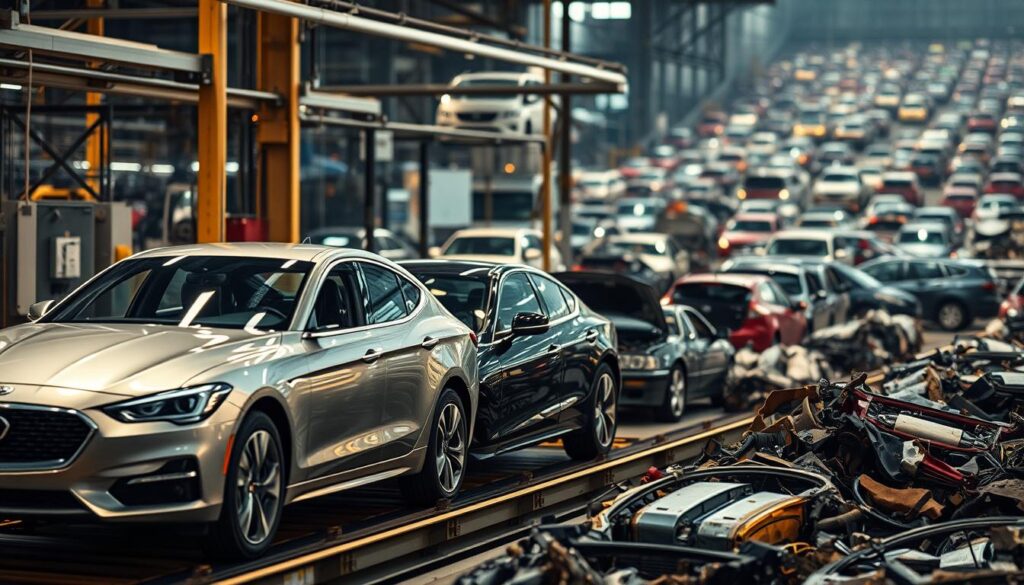
It’s important to know how a car’s life affects the environment. A car’s life includes making it, using it, and getting rid of it. Each part has a big impact on our planet.
From Production to Disposal
A car’s journey starts with making it. This means getting raw materials like steel and plastics. It takes a lot of energy and makes a lot of pollution.
After it’s made, the car is used. It burns fuel and makes pollution. When it’s done, it’s either recycled or thrown away.
Using recycled materials and making cars easier to recycle can help. It makes making cars better for the planet.
The Environmental Footprint of Cars
Cars have a big impact on the environment. They make pollution and contribute to climate change. They also waste space in landfills when they’re thrown away.
To lessen this, recycling cars is key. It saves materials, cuts down on waste, and saves energy. It also means less pollution from making new cars.
Knowing how cars affect the environment helps us find ways to lessen that impact. We can use eco-friendly ways to make cars and recycle them when they’re done.
Every choice we make about our cars matters. We can drive better, keep our cars longer, or recycle them. Every little bit helps.
Community Initiatives for Junk Car Disposal
Across the United States, communities are working hard to protect the environment. They are focusing on responsible junk car disposal. These efforts not only keep our surroundings clean but also encourage everyone to live more sustainably.
Local Cleanup Efforts
Community clean-up events are a big part of these initiatives. They bring people together to remove junk cars in a way that’s good for the planet.
- Community clean-up days are organized regularly.
- Local towing services help with the removal.
- Recycling centers ensure junk cars are disposed of properly.
Education on Eco-Friendly Practices
Education is also key in these efforts. Workshops and campaigns teach people why proper junk car disposal matters.
Key educational initiatives include:
- Workshops on recycling vehicles and its benefits.
- Materials are given out to spread the word.
- Online guides help junk car owners.
The Economic Benefits of Junk Car Recycling
Junk car recycling has many economic benefits. It helps create jobs and saves money for communities. It’s also good for the environment, which is important.
Recycling junk cars helps the economy in several ways. It creates jobs in recycling and saves money for communities. This is good for both the environment and the economy.
Job Creation in Recycling Industries
The junk car recycling industry creates many jobs. People work in collecting, transporting, and processing cars. These jobs help individuals and the community’s economy.
- Dismantling and processing recyclable materials
- Management and operation of salvage yards
- Sale of recycled parts and materials
Savings for Communities
Recycling junk cars saves communities money. It reduces landfill costs and environmental damage. This helps local economies and improves life for residents.
- Reduced landfill costs
- Lower environmental cleanup costs
- Economic benefits from the sale of recycled materials
In summary, junk car recycling has big economic benefits. It supports local communities and the environment. By understanding these benefits, we can work towards a better future.
Future Trends in Junk Car Management
The junk car management industry is set for big changes. New tech and changing consumer habits are driving these shifts. Innovations in recycling are making the process better and greener.
Advancements in Recycling Processes
New tech is improving junk car recycling. It lets us get more materials back and use them again. This cuts down on waste and saves natural resources. Companies like CarGurus are leading the way in green practices in the car world.
Increasing Awareness Among Car Owners
Car owners are getting more aware of eco-friendly car disposal. They want services that handle junk cars responsibly. We offer easy, quick cash for car sellers and clear, efficient service.
By following future trends, we can make the junk car industry greener. As people demand more eco-friendly options, we’re committed to leading in recycling tech and educating car owners.